Friday, May 21, 2004

Do I share God's desire...?

Do I share God's desire to make of all the nations citizens of his Kingdom of justice, love and peace?

From Catholic Ireland Zine:

We need look no further than today's newspapers to see the shocking misuse of power in the prisons of Iraq. Nothing can justify that behaviour, which so degrades human beings. Power entrusted to the hands of a fallible human being can easily lead to distorted judgments and exploitative behaviour… The power over others that comes with military victory has been abused and it is right that such events be brought to light.
– Most Rev Vincent Nichols, Archbishop of Birmingham
Remember, it is our fallibility and weakness--our sinfulness--that make limits on power necessary. We should not trust people with power when they say "Trust us. We won't misuse our power."

Also at Catholic Ireland Zine, an article by the late Father Niall O’Brien on Preemptive strikes for peace has caught my eye. Here are some excerpts:

What will a future generation say of us who are so judgmental about the failures of previous generations? Today we know far more about what is going on in the Congo, Chechnya or the Middle East and have far greater possibilities of checking out the truth than our predecessors ever had. We have enormous financial and technical resources and still, for instance, nothing was done to stop the mass-destruction of half a million people in Rwanda or the slaughter of so many in Central America.

War, often promoted by outside financial greed, is the main cause of suffering in many of these poverty stricken places. Someone described war as the ultimate poverty. In war you loose everything. We are paralyzed with horror by the abduction and murder of children here at home. Yet in the armed conflicts that are presently taking place two thousand children are killed or injured every single day.

[snip]

Peace is not just the absence of war or tension. Peacemaking involves scanning the horizon for those things that are the seeds of war and then undertaking deliberate preemptive work to remove them. Peacemaking means support for those unsung people who work at the various peace processes throughout the world. It demands an awareness of what is going on in the world around us and a commitment to confront the conditions and issues which produce war and oppression. It means taking time to study issues like the effect on children of sanctions in Iraq (which according to a visiting group of Nobel Prize winners cause up to 4,500 deaths every month); the reasons why Palestinians are prepared to blow themselves up; or the involvement of multinational companies in Africa's wars. Peacemaking means educating ourselves, taking stands on issues and continually praying for peace.

[snip]

What is the alternative, you ask? The short answer is active non-violence. As one who has studied and tried to promote non-violence over the years I am sometimes daunted by the ignorance of ordinary Christians about the possibility and effectiveness of non-violence as an alternative to war.

Let me just say this: "Boy, do they prepare for war!" All those weapons, technology and research, all that discipline and money. And we expect nonviolence to work without preparation. God will provide! Not without our involvement!

Non-violence is not a magic wand, but a disciplined way of life. It is an art that demands much study and training. An example of what it can achieve was the fall of President Marcos in the Philippines (1986). Those of us who lived through his oppression were familiar with his death squads, with their massacres and "disappearances". A friend once said to me: "maybe non-violence would work in India with Gandhi and the British – who were sort of gentlemen – but certainly not here in the Philippines." Not long afterwards the Marcos supporters watched with amazement as his regime crumbled before crowds armed with flowers, sandwiches, statues and prayers.

[snip, to concluding paragraph:]

Some time ago I edited a prayer book and when I came to the part on confession I put in at the beginning the question: Before thinking of confession have you yourself forgiven? I suddenly realized that I had never seen that as a requirement for confession before. Yet it is in every line of the Gospel, it is the lifeblood of the Christian story. Start with your own life. Learn to forgive, disarm your own heart. Then begin to think of ways to bring the Gospel of Peace to your own house, to your neighbourhood and to the wider world.
I have been reading Simon Wiesenthal's book The Sunflower; On the Possibilities and Limits of Forgiveness. It is easy to understand the Christian responsibility to forgive sins against oneself. What authority does one have to forgive trespasses against others? This topic came up recently on Hugo Schwyzer's blog in a post entitled Nick Berg, anger, and pacifism:
Look, I'm a Christian pacifist more than I am a "liberal". My pacifism is not situational. And it is not rooted in idealistic illusions about human nature, either. Before the Nick Berg video, I was not under the impression that the boys in Al Qaeda were nice, reasonable folks, who just needed to be shown the love of Christ in order to bring them around to civilization. Real pacifists have no doubts about the reality of human depravity! Human beings do awful, disgusting, beastly things to each other -- they've been doing those things for centuries; only recently have they insisted on filming themselves while they do it. So no, I haven't "changed my mind" about anything as a result of being presented with video evidence of barbarism.

Most Christian pacifists throughout history have held to their pacifism in the face of incredible ugliness and persecution. I am tired of the accusation that Christian pacifism is a position of the "comfortably naive", while just war theory is the position of the (apparently) "responsibly wise". Pacifism flourished in the persecutions of 3rd century Rome, in 16th century Europe, and in 20th century South Africa. Sometimes the patient endurance of suffering impressed the oppressors so much that they rethought their oppression (the British in India), but most of the time, a lot of nice pacifists just got killed. I am a pacifist not because I believe that "love can change the world", but because I believe that God can and does act dramatically in human history to change what we cannot. I believe that to follow Christ is to foreswear the use of weapons, even in self-defense. I believe that the victory over death and evil has already been won by Christ, and my only job is to follow Him.

Look, these are the musings of a childless man. (Pacifism, I'm told, gets a whole lot tougher when you have little ones). But despite what some of my more conservative and hawkish friends say (and they are truly friends), I am not a pacifist because I fail to comprehend the enormity of human wickedness, nor am I pacifist because I am a coward. I am a pacifist because my lord tells me that even while I grieve Nick Berg, and feel nausea and sadness and, yes, rage at his death, I must pray all the harder for the men who killed him. I must respond even to this unspeakable ugliness with love. If Nick Berg had been my brother, could I write those same words? In the short run, no; I would surely be overcome by an anger so intense that it blinded me. But in the end, no matter what my human emotions may be, I know the only way forward is forgiveness, and that, as my Savior taught me and as my church teaches, that forgiveness must be expressed in action. And responding to Nick Berg's death with violence is incompatible with that understanding of forgiveness.
[emphasis in original]Then, read a comment by xlrq to this post:
Sorry, Hugo, but this time you're on your own. Your concept of forgiveness is, quite frankly, whacked, both as a matter of Biblical theology and as a matter of basic morals. No one has the right to "forgive" the monsters who butchered Nick Berg. Only Berg himself has that right, and thanks to them, he is no longer capable of exercising it. All you have the right to forgive them for is the pain that their heinous act caused to YOU. The rest is not yours (or mine, or anyone else's) to forgive. If there's a God (which, as an agnostic, I will neither admit nor deny), then I'll concede that HE has that right. For anyone else to take it upon themselves to forgive a wrong committed against someone else is, I submit, to play God.

But perhaps I err. Perhaps, when Jesus urged everyone to pray saying "forgive us our debts, as we forgive our debtors," he really meant "forgive us our debts, as we forgive each other's debtors." If that's how it works, have I got a deal for you: I'll forgive your mortgage if you forgive mine. I'm sure the banks will understand.
[emphasis added] If it is true that only the murdered can forgive the murderers...

And read Hugo Schwyzer's follow-up post on this topic:
What does it mean to not "repay" evil with evil, when no evil has been done to me in the first place? How can I advocate turning the other cheek when my cheek has not been struck?
[emphasis in original]


Clap your hands, all you peoples;
shout to God with loud songs of joy.
For the LORD, the Most High, is awesome,
a great king over all the earth.
He subdued peoples under us, and nations under our feet.
He chose our heritage for us, the pride of Jacob whom he loves.
God has gone up with a shout, the LORD with the sound of a trumpet.
Sing praises to God, sing praises;
sing praises to our King, sing praises.
For God is the king of all the earth;
sing praises with a psalm.
--Psalm 47:2-7 (46:2-7 in the Roman Catholic numbering of the Psalms)

Thursday, May 20, 2004

New image host for Ghost Town Orange

Finally, Blogger has enabled image hosting for cheapo blogs like Ghost Town Orange. We are so sick of arbitrary band-width restrictions by these free hosts that shut down images whenever they actually get used.

So here's a plug for Picasa's Hello Software with Bloggerbot. This, plus Blogger's recent revamp with new templates, comments, RSS feed, etc. means I have some template tinkering to do... :-}


To do's:
1. Find one of Blogger's new template for Ghost Town Orange's Archive.
2. Check links in old posts.
3. Move image files to new host and update in posts.
4. Clarify RSS feed. It seems that I promised to write about newsfeeds and never have...
5. Maybe I'll provide an alternative non-Javascript-heavy version of Ghost Town Orange.

Father, let me dedicate All this year to you
In whatever earthly state You will have me be
Not from sorrow, pain, or care Freedom dare I claim;
This alone shall be my prayer: Glorify Your name.
--from New Year's Hymn by Lawrence Tuttiett, 1864 (alt.)

Straight talkers about Iraq

So much news about Iraq today; I have not read enough about the Chalabi raid to have an informed opinion about it; I never have trusted Chalabi and his group. Chalabi was a primary promoter of the 'WMD imminent threat' meme. Chalabi is also partly responsible for the inadequate preparation for post-occupation Iraq--the claim that the Iraqi people would welcome the US as liberators has turned out to be exaggerated.

A couple of choice quotes found in today's Guardian:

First, General Joseph Hoar, former commander-in-chief of US central command, speaking to the Senate Foreign Relations Committee:
I believe we are absolutely on the brink of failure. We are looking into the abyss.
[More quotes from General Hoar here]

Second, Larry Diamond, analyst at the Hoover Institution:

I think it's clear that the United States now faces a perilous situation in Iraq.

We have failed to come anywhere near meeting the post-war expectations of Iraqis for security and post-war reconstruction.

There is only one word for a situation in which you cannot win and you cannot withdraw - quagmire.

Note that Diamond is cautiously optimistic about the prospects for democracy everywhere. Read his article "Universal Democracy?"


Pelosi telling it like it is. Posted by Hello


Here's what Nancy Pelosi, House Democratic Leader, has to say, in the San Francisco Chronicle:
"Bush is an incompetent leader. In fact, he's not a leader,'' Pelosi said. "He's a person who has no judgment, no experience and no knowledge of the subjects that he has to decide upon.''

Pelosi has long been an outspoken critic of Bush and the war in Iraq. Yet the tone and extent of her comments during an interview with The Chronicle go well beyond criticisms leveled by her and other Democratic leaders in the past.

Speaking from her Capitol office for 45 minutes, Pelosi portrayed the president as dangerously in over his head and stubbornly unwilling to consider information that clashes with his own preconceptions.

"He has on his shoulders the deaths of many more troops, because he would not heed the advice of his own State Department of what to expect after May 1 when he ... declared that major combat is over,'' Pelosi charged. "The shallowness that he has brought to the office has not changed since he got there.''
Amen.
Update: grammar and spelling corrected in post, 9:11 pm CDT

Father, let me dedicate All this year to you
In whatever earthly state You will have me be
Not from sorrow, pain, or care Freedom dare I claim;
This alone shall be my prayer: Glorify Your name.
--from New Year's Hymn by Lawrence Tuttiett, 1864 (alt.)


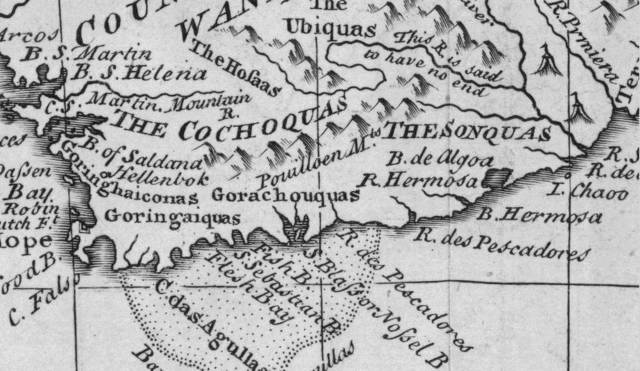
This R. is said to have no end Posted by Hello

Guided prayer

Try a daily guided prayer with Irish Jesuits at Sacred Space.

And here is a similar American site for younger people: Sacred Gateway.
If I find these links useful, I will add them to my Christian links page.

Jesus said to his disciples, "Very truly, I tell you, you will weep and mourn, but the world will rejoice; you will have pain, but your pain will turn into joy." --John 16:20

Wednesday, May 19, 2004

Irish Postage Stamps Commemorate the 50th Texaco Children's Art Competition

An Post, the Irish Post Office, has issued a set of stamps commemorating the 50th Texaco Children's Art Competition. Earlier today, the Irish President, Mary McAleese unveiled the new stamps (see McAleese praise as youngsters stamp their art class [story from Breaking News.ie].)

Here is a low resolution composite image of the new stamps:

(Click on the image to see higher resolution images of the original artwork.)

Father, let me dedicate All this year to you
In whatever earthly state You will have me be
Not from sorrow, pain, or care Freedom dare I claim;
This alone shall be my prayer: Glorify Your name.
--from New Year's Hymn by Lawrence Tuttiett, 1864 (alt.)

Sunday, May 16, 2004

Site of ancient Alexandria's library found

Or maybe we should call it the world's first university? Here's the BBC report by Dr. David Whitehouse--Library of Alexandria discovered:
Announcing their discovery at a conference being held at the University of California, Zahi Hawass, president of Egypt's Supreme Council of Antiquities, said that the 13 lecture halls uncovered could house as many as 5,000 students in total.

A conspicuous feature of the rooms, he said, was a central elevated podium for the lecturer to stand on.

"It is the first time ever that such a complex of lecture halls has been uncovered on any Greco-Roman site in the whole Mediterranean area," he added.

"It is perhaps the oldest university in the world."
Later in the article, Dr. Whitehouse lists some of the famous achievements that occured at Alexandria:
It was at the library that Archimedes invented the screw-shaped water pump that is still in use today.

At Alexandria Eratosthenes measured the diameter of the Earth, and Euclid discovered the rules of geometry.

Ptolemy wrote the Almagest at Alexandria. It was the most influential scientific book about the nature of the Universe for 1,500 years.

The library was later destroyed, possibly by Julius Caesar who had it burned as part of his campaign to conquer the city. [link to article by Preston Chesser, which gives several possible culprits--all accused by biased 'authorities' with axes to grind...]

Why, oh why, did the library have to be burned?

Father, let me dedicate All this year to you
In whatever earthly state You will have me be
Not from sorrow, pain, or care Freedom dare I claim;
This alone shall be my prayer: Glorify Your name.
--from New Year's Hymn by Lawrence Tuttiett, 1864 (alt.)

Macedonian plot update

I blogged about this Macedonian plot about 2 weeks ago, but now the New York Times has reported on it. The New York Times report by Nicholas Wood includes rather gruesome photos and more information about how the plot has come to light:
Instead of offering troops to support American soldiers fighting in Afghanistan, as other countries in the region had done, senior officials and police commanders conceived a plan to "expose" a terrorist plot against Western interests in Skopje, police investigators here say.

The plan, they say, involved luring foreign migrants into the country, executing them in a staged gun battle, and then claiming they were a unit backed by Al Qaeda intent on attacking Western embassies.

On March 2, 2002, this plan came to fruition when Interior Minister Ljube Boskovski announced that seven "mujahedeen" had been killed earlier that day in a shootout with the police near Skopje. Photos were released to Western diplomats showing bodies of the dead men with bags of uniforms and semiautomatic weapons at their side.

At the time, diplomats in Skopje questioned the government's story, but it was not until the nationalist-led government lost elections in September 2002 and a new center-left administration came to power that the police began to investigate the shooting in earnest. The full extent of the state's involvement in the incident has only emerged in the last two weeks.
Let's see, 'conservative' nationalist politicians cook up phony anti-terror plot and cover it up; 'center-left' administration comes to power and eventually uncover the truth. This is just more evidence that good, competent governance comes from center-left parties, not right-wingers. (My political bias is showing!)

Well, it's safe to say many people in Macedonia have known or suspected the truth about this plot for quite a while. It is an exageration to suggest that 'just now' the truth is coming to light. Maybe it's more accurate to say that the truth is finally coming to the attention of the SCLM.*

*So-Called Liberal Media

Father, let me dedicate All this year to you
In whatever earthly state You will have me be
Not from sorrow, pain, or care Freedom dare I claim;
This alone shall be my prayer: Glorify Your name.
--from New Year's Hymn by Lawrence Tuttiett, 1864 (alt.)

Chess column critique of Bush and Blair

Nigel Short, International Grand Master and chess columnist for the Sunday Telegraph, began today's column with a blistering critique of George Bush and Tony Blair:
The day after submitting my column last week - in which I mentioned that the Womens World Championship was no longer to be held in Ajara - Aslan Abashidze, the Ajaran despot, was unceremoniously deposed.

I am quite sure this was coincidence but, on the off- chance it wasn't, my wife has requested that I write about Tony Blair and George Bush this time. Regrettably, there is little documentary evidence to suggest that either of these gentlemen play the noble game.

It is a pity, for, judging by their actions in Iraq and elsewhere, both of them clearly possess the mental capacity, foresight and aptitude to execute a plethora of one-move combinations.
For those not familiar with chess, there is no such thing as a one-move combination; by definition, a combination consists of two or more moves working together for a common purpose.

Father, let me dedicate All this year to you
In whatever earthly state You will have me be
Not from sorrow, pain, or care Freedom dare I claim;
This alone shall be my prayer: Glorify Your name.
--from New Year's Hymn by Lawrence Tuttiett, 1864 (alt.)

Saturday, May 15, 2004

we should remember that we are messengers of Jesus’ gospel of peace

not of “the Mennonite peace position.” From an editorial by Paul Schrag in Mennonite Weekly in which he discussed a speech by Richard Kauffman on “Communicating the Message of Peace to Skeptical Audiences”:
Jesus desires all his followers to live peaceably, but many have failed to accept this essential part of his message.

At the same time, peace advocates must be clear that they do not claim to know how to solve all the world’s problems quickly. Christian peacemaking “is not about the most expeditious way of dealing with violence in the short term,” Kauffman said. “Part of being a Christian is saying we don’t take short cuts. Jesus’ way of peace isn’t the shortest way.”

Sometimes an effective way to stop violence, at least for a time, is to answer it in kind. We should admit that. But, eventually, violence breeds more of the same. Problems either aren’t solved, or they are traded for a new set of problems. We see this in Iraq: The invasion ousted Saddam Hussein but produced increasing terrorism against Iraqis and Americans.

That’s the practical argument, and we should make it. But it’s not the most important one. Fundamentally, we don’t advocate peace because it works but because it is a response of faith, an unavoidable consequence of a decision to give our lives to Jesus completely. When faced with a choice between doing what “works” and being true to Christ, we hope and pray we will choose to act faithfully.
Now the problem in Iraq is that the United States can't quickly disentangle itself without making things worse. How can the coalition forces leave without dumping Iraq into a bloody civil war and partition?


Father, let me dedicate All this year to you
In whatever earthly state You will have me be
Not from sorrow, pain, or care Freedom dare I claim;
This alone shall be my prayer: Glorify Your name.
--from New Year's Hymn by Lawrence Tuttiett, 1864 (alt.)

The whispering wheel

From Radio Netherlands, a new Dutch invention that can make vehicles much more efficient with already-existing technology-an in-wheel electric engine:
All this is made possible by an ‘in-wheel' electric engine, in fact nothing more than a normal electric engine turned inside out.

The outer wall of a traditional electric engine is a cylinder lined on the inside with copper wire. If electricity is fed into the copper wire, the current will circle the cylinder on the inside at high speed. Cylinder and wire together are called the ‘stator' (because it doesn't move).

To change the electricity running along the inner wall of the cylinder into movement, another part of the engine comes into play: ‘the rotor'. This is in fact an axle, mounted in the centre of the cylinder, with permanent magnets attached to it. The electrical current in the stator pulls the rotor magnets along and the axle starts to turn.

The wheel works precisely the other way around. The fixed part of the engine - the stator - is now on the inside. The wire is wrapped around it.

The moving part of the engine – the rotor - is no longer an axle fitted with magnets but a ring running on the outside of the stator.

The magnets are fixed on the inside of this ring. If power is fed into the engine the magnets will – as before - follow the current, but now it's the ring on the outside, which will turn.

Eureka
And that's what makes ‘the whisperer´revolutionary; a ring functioning as a wheel. By just putting a tire on it you can drive a bus, a car, anything with it. Since the wheel is in fact the engine, no axles or any other friction-producing and therefore energy-wasting mechanical parts are needed.

Even the transmission is unnecessary; if you want to go faster you just run more electricity through the engine. And it works really well while braking, when the in-wheel engine works as a generator, produces electricity to charge the batteries.
A report on this invention was featured on the Radio Netherlands program Research File. Listen by clicking here (RealPlayer required)What a great idea! This kind of engine reminds me of the kind of water heater that heats water right at the sink or shower. This makes so much more sense than heaters that keep a big tank of water hot 24 hours a day.

UPDATE

Here's a link to e-Traction, the company behind the whispering wheel.

SPIEGEL TV exklusiv: Iraker in US-Haft zu Tode gefoltert - Politik - SPIEGEL ONLINE

The German newsweekly doubts that 47 year old Iraqi prisoner Asad Abdul Kareem Abdul Jaleel died in his sleep:
Zuvor hatten amerikanische Truppen den angesehenen Stammes-Ältesten auf offener Straße festgenommen und zur amerikanischen Militärbasis Al Asad westlich des Ortes Khan Al Baghdadi gebracht. Angeblich bestand der Verdacht, der Festgenommene gehöre dem irakischen Widerstand an. In dem Gefängnis innerhalb der Basis sollen die Soldaten Asad Abdul Kareem Abdul Jaleel massiv unter Druck gesetzt haben. Ein Mitgefangener beschrieb gegenüber SPIEGEL TV detailliert, wie der 47-Jährige fünf Tage lang auf sadistischste Weise gefoltert wurde. Von den Misshandlungen hätten US-Soldaten auch Fotos gemacht, so der Zeuge.


Am 9. Januar dieses Jahres starb Asad Abdul Kareem Abdul Jaleel in der US-Haft. An der Version eines natürlichen Todes jedoch gibt es erhebliche Zweifel. Ein irakischer Gerichtsmediziner, der den Leichnam des Mannes von den US-Streitkräften übernahm, bestätigte gegenüber SPIEGEL TV in Bagdad eindeutig Folterspuren am Körper des Verstorbenen diagnostiziert zu haben. Bilder des Toten belegen zudem, dass der Mann entgegen den US-Angaben sehr wohl obduziert wurde. Die Narben auf dem Oberkörper deuten daraufhin, dass dies westliche Ärzte durchgeführt haben.
The emboldened quote can be paraphrased: A fellow prisoner described in a face-to-face interview with SPIEGEL TV in detail how the 47-year-old was tortured in a sadistic way for five days. There's no torture going on in Iraq, just fraternity high-jinks and good-ole American amateur porn. Or if there is torture, it's the fault of a few bad apples. Or if it's not just a few . . .